

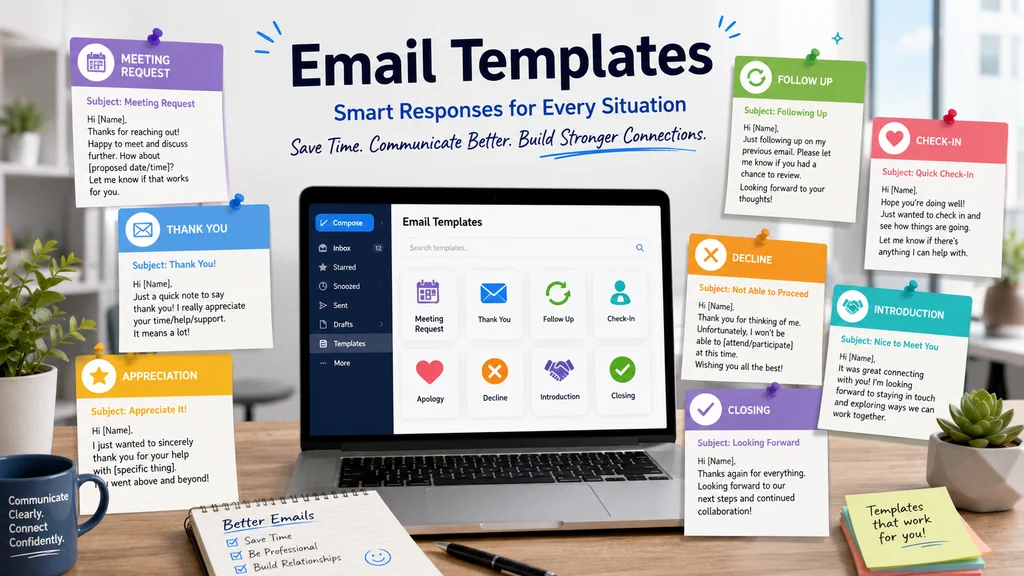
The best canned response emails save time while maintaining professionalism and warmth. Choose templates that match your situation while keeping your unique voice. Top alternatives: "Thanks for your email, I'm currently out of office," "Appreciate your message, I'll respond within 24 hours," "Thanks for reaching out, here's the information you need," "I've received your request and will follow up soon," and "Thanks for your inquiry, please find my response below."We’ve all been there. Your inbox is overflowing, deadlines are looming, and somehow you’re expected to reply to every single email with the same level of thought and care you’d give to a handwritten letter. The pressure is real. But here’s the secret that busy professionals everywhere have discovered: canned response emails are not just acceptable, they’re actually smart business.
Whether you’re sending a quick acknowledgment, sharing important information, or politely declining an invitation, having a library of ready-to-use email templates can save you hours of stress and typing. The trick is making these automated responses feel human and personal, not robotic or dismissive. Your canned response email doesn’t have to sound like it came from a robot. In fact, the best ones sound exactly like you, just a slightly more efficient version of you.
Let’s dive into 150+ canned response email templates that will transform your inbox management and communication style.
Quick Acknowledgment Responses
1. Thanks for your email. I’m currently out of the office and will respond when I return.
Example: Set this as your automatic reply when you’re on vacation or away from work for extended periods.
Meaning: Professional courtesy that manages expectations while you’re unavailable.
2. I’ve received your message and will get back to you within 24 hours.
Example: Use this for initial acknowledgment when you need time to craft a thoughtful response.
Meaning: Sets clear timing expectations and shows you value their message.
3. Thanks for reaching out. I’ll review your request and follow up shortly.
Example: Perfect for when you receive new project inquiries or collaboration requests.
Meaning: Shows you’re taking their message seriously and will provide a proper response.
4. Your email has been received and I’ll be in touch soon.
Example: Use this when you’re swamped but want to confirm receipt of important information.
Meaning: Basic acknowledgment that prevents senders from wondering if you got their message.
5. Thanks for your message. I’ll respond as soon as possible.
Example: Great for busy periods when you can’t give an exact timeline.
Meaning: Honest commitment to reply without overpromising on timing.
6. Appreciate you reaching out. I’m currently traveling but will respond within 48 hours.
Example: Use this when you’re traveling or working remotely with limited access.
Meaning: Transparent about your situation while maintaining professionalism.
7. I’ve received your inquiry and will address it by the end of the week.
Example: Set this when you need buffer time to gather information or consult with others.
Meaning: Specific timeline that helps manage expectations.
8. Thanks for your patience as I review your request.
Example: Use this when the sender has been waiting and you’re acknowledging the delay.
Meaning: Shows you respect their time and are working on their request.
9. Your message has been forwarded to the appropriate team member.
Example: Use this when you’re not the right person to handle their request.
Meaning: Ensures they know their message is being handled by the right person.
10. I’m currently in meetings but will get back to you this afternoon.
Example: Use this for quick responses during busy work days.
Meaning: Honest about availability while showing commitment to replying.
11. Thanks for your patience as I work through my inbox.
Example: Use this when you’re catching up after being away from email.
Meaning: Friendly acknowledgment that you’re working through messages in order.
12. I’ll have a comprehensive response for you by the end of the day.
Example: Use this when you need time to research or prepare a detailed answer.
Meaning: Promises quality and thoroughness in your follow-up response.
Information Sharing Responses
1. Here’s the information you requested about our services.
Example: Use this when responding to basic inquiries about your offerings.
Meaning: Direct and helpful response that provides exactly what they asked for.
2. I’ve attached the documents you need for this project.
Example: Perfect for sharing files, contracts, or reference materials.
Meaning: Efficient delivery of requested materials.
3. Please find the details you requested in the attached file.
Example: Use this when sending proposals, estimates, or reports.
Meaning: Professional presentation of important information.
4. Here’s the link to our resources that should answer your questions.
Example: Use this when directing people to existing online resources.
Meaning: Saves time while still being helpful.
5. I’ve compiled the information you asked for into this document.
Example: Use this when you’ve created custom materials for someone.
Meaning: Shows effort and thoughtfulness in your response.
6. Here are the details we discussed during our meeting.
Example: Follow up after important conversations with supporting information.
Meaning: Reinforces in-person discussions with written documentation.
7. I’ve added you to our mailing list for future updates.
Example: Use this when someone wants to stay informed about your work.
Meaning: Helpful action that keeps them in the loop.
8. Here’s the contact information for the person who can help you further.
Example: Use this when you’re not the best person to address their needs.
Meaning: Points them to the right resource without leaving them hanging.
9. I’ve included all the relevant details you’ll need to get started.
Example: Use this when someone is beginning a project with you.
Meaning: Sets them up for success with comprehensive information.
10. Please review the attached materials and let me know if you have questions.
Example: Use this when sending important documents for review.
Meaning: Opens the door for further discussion and clarification.
11. Here’s the updated information since we last communicated.
Example: Use this to follow up on previous conversations with new information.
Meaning: Keeps people updated without repeating what they already know.
12. I’ve summarized our options in the attached file for your review.
Example: Use this when presenting choices or alternatives.
Meaning: Makes decision-making easier with organized information.
Professional Responses
1. Thank you for your email. I’m currently out of the office with limited access to email.
Example: Set this when you’re traveling or at conferences.
Meaning: Honest about availability while maintaining professionalism.
2. I’ll be away from my desk until [date] and will reply when I return.
Example: Use this for planned time off with a specific return date.
Meaning: Clear communication that prevents follow-up emails.
3. I’m currently unavailable but will get back to you soon.
Example: Use this for unexpected absences or emergencies.
Meaning: Basic acknowledgment without unnecessary details.
4. I’m out of the office and will respond to your email promptly upon my return.
Example: Use this for longer absences when you want to set expectations.
Meaning: Professional courtesy that protects your time off.
5. I’m traveling for work and will reply when I’m back in the office.
Example: Use this during business travel.
Meaning: Maintains professionalism while explaining your absence.
6. Thanks for your patience while I’m away from the office.
Example: Use this as a friendly out-of-office message.
Meaning: Acknowledges the inconvenience while staying positive.
7. I’ll be back in the office on [date] and will respond then.
Example: Use this for planned personal time off.
Meaning: Clear timeline that helps people plan around your absence.
8. I’m currently unavailable due to scheduled leave.
Example: Use this for vacation or personal time.
Meaning: Professional and straightforward.
9. I’m away from my email but will check in periodically.
Example: Use this when you have limited but occasional access.
Meaning: Honest about your availability.
10. I’m at a conference and will respond when I return.
Example: Use this for professional development travel.
Meaning: Professional explanation for your absence.
11. I’ll be out of the office until [date] with no email access.
Example: Use this for remote locations without internet.
Meaning: Sets clear expectations about communication.
12. I’m currently unavailable but will respond to your message ASAP.
Example: Use this for unexpected situations.
Meaning: Shows urgency despite being unavailable.
Thank You and Follow-Up Responses
1. Thanks so much for your message. I really appreciate you taking the time to reach out.
Example: Use this when someone sends a kind or thoughtful email.
Meaning: Genuine appreciation that strengthens relationships.
2. I’ve received your email and will make sure to follow up properly.
Example: Use this when you need time to prepare a thorough response.
Meaning: Shows you value their message and will give it proper attention.
3. Thank you for taking the time to send this. I’ll get back to you soon.
Example: Use this when someone sends a detailed or complex message.
Meaning: Acknowledges their effort while promising a response.
4. I’ve gotten your message and will be in touch with a full reply.
Example: Use this when you need to research before responding.
Meaning: Confidence that you’ll provide a complete answer.
5. I’m so glad you reached out about this. I’ll follow up shortly.
Example: Use this when you’re excited about their interest or inquiry.
Meaning: Enthusiasm that encourages ongoing communication.
6. Thanks for the opportunity to work together on this project.
Example: Use this when starting new collaborations or partnerships.
Meaning: Professional gratitude and enthusiasm.
7. I appreciate you thinking of me for this opportunity.
Example: Use this in response to project offers or invitations.
Meaning: Shows gratitude without committing immediately.
8. Thank you for your interest in our work together.
Example: Use this when someone wants to collaborate or hire you.
Meaning: Professional appreciation for their interest.
9. I’m excited to get started on this with you.
Example: Use this when you’re beginning a new project or partnership.
Meaning: Enthusiasm and positive energy.
10. Thanks for taking the time to share your thoughts with me.
Example: Use this when someone provides feedback or ideas.
Meaning: Values their input and shows appreciation.
11. I truly appreciate you keeping me in the loop about this.
Example: Use this when someone shares updates or information.
Meaning: Gratitude for being included.
12. Thank you for the thoughtful and detailed message.
Example: Use this when someone puts effort into their communication.
Meaning: Recognizes and values their effort.
Meeting and Scheduling Responses
1. Can we schedule a time to discuss this in more detail?
Example: Use this when a conversation is better than an email exchange.
Meaning: Moves complex discussions to a more appropriate setting.
2. I’d love to talk about this further. Are you available for a call this week?
Example: Use this when you want to explore an opportunity or idea.
Meaning: Shows enthusiasm while taking next steps.
3. Let’s set up a time to connect and discuss your ideas.
Example: Use this when someone proposes something interesting.
Meaning: Opens the door for deeper conversation.
4. I’m available for a meeting [day] at [time]. Does that work for you?
Example: Use this for proposing specific times.
Meaning: Proactive scheduling that saves back-and-forth.
5. I’ve added you to my calendar for our discussion about [topic].
Example: Use this after you’ve confirmed a meeting time.
Meaning: Professional confirmation and organization.
6. Let me know what times work best for you and we’ll find something.
Example: Use this when you’re flexible.
Meaning: Accommodates their schedule.
7. I’d like to meet in person to discuss this further.
Example: Use this for important or sensitive topics.
Meaning: Shows the matter is important enough for face-to-face discussion.
8. I’m looking forward to our conversation about [topic].
Example: Use this before a scheduled meeting.
Meaning: Shows enthusiasm and preparation.
9. I’ll send you a calendar invitation for our meeting.
Example: Use this to formalize a previously discussed meeting.
Meaning: Professional courtesy that helps with scheduling.
10. I’m excited to connect and hear more about your project.
Example: Use this when you’re interested in what someone’s working on.
Meaning: Shows genuine interest and engagement.
11. Thanks for your patience while we sorted out scheduling.
Example: Use this when there were delays in planning a meeting.
Meaning: Acknowledges the inconvenience gracefully.
12. I’ve added our meeting to my calendar and look forward to it.
Example: Use this to confirm a scheduled meeting.
Meaning: Professional confirmation and enthusiasm.
Decline and No-Thank-You Responses
1. Thank you for the invitation. Unfortunately, I won’t be able to attend.
Example: Use this for polite event or meeting declines.
Meaning: Gracious refusal that maintains relationships.
2. I’m not the best person to help with this, but I’ll connect you with someone who is.
Example: Use this when you can’t help but can offer a referral.
Meaning: Helpful even when you can’t provide direct assistance.
3. I’ll have to decline this opportunity, but I appreciate you thinking of me.
Example: Use this for professional opportunities you can’t take.
Meaning: Shows gratitude while saying no.
4. While I can’t commit to this right now, I’d love to stay in touch.
Example: Use this when timing is wrong but you’re still interested.
Meaning: Keeps the door open for future opportunities.
5. I’d love to, but I’m currently unavailable for new projects.
Example: Use this when you’re at capacity.
Meaning: Honest about your limitations.
6. While I’m not interested in this particular project, I’d be happy to refer others.
Example: Use this when you want to be helpful but aren’t a fit.
Meaning: Helpful alternative to a direct no.
7. I’m flattered you thought of me, but I’ll have to decline this time.
Example: Use this for personal invitations or requests.
Meaning: Kind refusal that shows appreciation.
8. This isn’t the right fit for me right now, but thank you for asking.
Example: Use this for partnership or collaboration requests.
Meaning: Honest about fit without burning bridges.
9. I’m not able to help with this specific request, but here’s what I can offer instead.
Example: Use this when you can’t provide exactly what’s requested.
Meaning: Focuses on what you can do instead of what you can’t.
10. While I can’t commit to this, I hope it works out beautifully.
Example: Use this for declining with good wishes.
Meaning: Kind and supportive even in refusal.
11. I’d love to help, but I’m currently at capacity for new work.
Example: Use this when you’re too busy.
Meaning: Honest about your workload without guilt.
12. Thanks for the offer, but I’ll have to pass on this one.
Example: Use this for casual requests or offers.
Meaning: Simple and direct without being rude.
Project and Work-Related Responses
1. I’ve reviewed the project and will provide feedback by [date].
Example: Use this to acknowledge receipt of work submissions.
Meaning: Sets clear expectations for your review.
2. Your request is being processed and we’ll update you on progress.
Example: Use this for ongoing work or project management.
Meaning: Keeps people in the loop without constant updates.
3. I’ve completed the task you assigned and attached the results.
Example: Use this to deliver completed work.
Meaning: Shows you’ve followed through on commitments.
4. The team is working on this and we’ll provide updates weekly.
Example: Use this for long-term projects.
Meaning: Sets a regular communication schedule.
5. I’ve forwarded your request to the right department for handling.
Example: Use this when you’re passing work to others.
Meaning: Ensures they know who to contact next.
6. I’m making progress on this and will share an update by the end of the week.
Example: Use this to provide status updates.
Meaning: Shows you’re working on it while setting expectations.
7. We’ve received your project brief and will begin working on it.
Example: Use this to confirm project initiation.
Meaning: Official start of the project process.
8. I’ve added this project to my current workload and will prioritize it.
Example: Use this when you’re busy but want to reassure them.
Meaning: Shows you’re taking their request seriously.
9. Here’s the first draft of the project for your review.
Example: Use this to share work in progress.
Meaning: Shows progress and invites feedback.
10. The work has been approved and we’re moving forward to the next phase.
Example: Use this to communicate project milestones.
Meaning: Keeps stakeholders informed of progress.
11. I’ll need some additional information before proceeding.
Example: Use this when you’re waiting on details.
Meaning: Shows you’re ready to work but need more input.
12. This project is now complete and ready for your final review.
Example: Use this to deliver finished work.
Meaning: Closes the loop on the project lifecycle.
Customer Service Responses
1. Thank you for reaching out to us. We’re happy to help with your question.
Example: Use this as a friendly customer service opening.
Meaning: Welcoming and helpful tone.
2. I’m sorry to hear you’re experiencing this issue. Let’s work together on a solution.
Example: Use this for complaints or problems.
Meaning: Shows empathy and willingness to help.
3. Thank you for your patience while we look into your issue.
Example: Use this during problem investigation.
Meaning: Acknowledges they’re waiting and value their patience.
4. We’ve received your question and will get back to you within 24 hours.
Example: Use this to set expectations for response times.
Meaning: Clear timeline that helps manage expectations.
5. We’re currently looking into your concern and will update you soon.
Example: Use this when investigating problems.
Meaning: Shows you’re actively working on it.
6. Here’s the solution to the issue you described.
Example: Use this to provide final answers or fixes.
Meaning: Helpful and direct resolution.
7. We’ve updated our records based on your request.
Example: Use this for account or information updates.
Meaning: Confirms action was taken.
8. Your feedback has been forwarded to our team for review.
Example: Use this for customer suggestions or complaints.
Meaning: Shows their input is valued and considered.
9. I’ll need to escalate this to our technical team for further review.
Example: Use this for issues that require specialized help.
Meaning: Shows you’re getting them the right expertise.
10. We appreciate you bringing this to our attention.
Example: Use this for problem reports or suggestions.
Meaning: Values their input and help.
11. I’m following up to make sure your issue has been resolved.
Example: Use this for post-resolution follow-up.
Meaning: Shows commitment to customer satisfaction.
12. Is there anything else we can help you with?
Example: Use this to close customer interactions.
Meaning: Opens the door for additional needs.
Sales and Marketing Responses
1. Thank you for your interest in our services. Here’s what we offer.
Example: Use this for initial inquiries about products or services.
Meaning: Welcoming and informative.
2. I’d love to learn more about your needs and how we can help.
Example: Use this to qualify leads.
Meaning: Shows genuine interest in their situation.
3. Here’s our brochure and pricing information for your review.
Example: Use this to share marketing materials.
Meaning: Easy access to important information.
4. I’d like to schedule a call to discuss how we can work together.
Example: Use this for promising leads.
Meaning: Moves from email to more personal contact.
5. Your request is important to us and we’ll get back to you shortly.
Example: Use this for customer inquiries.
Meaning: Reassures them they’re valued.
6. Here are the benefits and features of our solution.
Example: Use this to explain your offerings.
Meaning: Clear and compelling product information.
7. I’d be happy to provide a demo or trial of our services.
Example: Use this to offer hands-on experiences.
Meaning: Shows confidence in your product.
8. Thank you for considering our partnership.
Example: Use this in professional relationship building.
Meaning: Professional and respectful.
9. Let me know if you’d like more details about anything I’ve mentioned.
Example: Use this to open dialogue.
Meaning: Invites further questions and conversation.
10. I think our solution would be a great fit for your needs.
Example: Use this for confident selling.
Meaning: Shows you’ve considered their situation.
11. Here are some examples of similar work we’ve done in the past.
Example: Use this to build trust.
Meaning: Proof of competence and experience.
12. I’m excited to explore how we can add value to your business.
Example: Use this to show enthusiasm.
Meaning: Positive and forward-looking.
Notification and Alert Responses
1. This is a notification that [important update] has occurred.
Example: Use this for system or process updates.
Meaning: Important information delivered clearly.
2. Please be aware of [important notice] regarding your account.
Example: Use this for security or policy updates.
Meaning: Important and urgent information.
3. This is a courtesy reminder about [upcoming event or deadline].
Example: Use this for gentle reminders.
Meaning: Helpful and considerate.
4. We wanted to let you know that [important change] will occur.
Example: Use this for transition notifications.
Meaning: Keeps people informed.
5. Please note that [important information] has been updated.
Example: Use this for policy or procedure changes.
Meaning: Keeps everyone on the same page.
6. We’re writing to inform you that [action has been taken].
Example: Use this for account or service updates.
Meaning: Professional notification.
7. Just a quick update on [topic or project].
Example: Use this for light updates.
Meaning: Brief and friendly.
8. We wanted to let you know that [problem has been resolved].
Example: Use this for outage or issue resolutions.
Meaning: Reassuring and informative.
9. We’ll be performing maintenance on [service] at [time].
Example: Use this for planned downtime.
Meaning: Proactive communication.
10. Please update your records with this new information.
Example: Use this for changes.
Meaning: Actionable and important.
11. We’ve made changes that will affect your account.
Example: Use this for policy or service changes.
Meaning: Important and requires attention.
12. We’re excited to announce [positive news or update].
Example: Use this for good news.
Meaning: Positive and upbeat.
Event and Invitation Responses
1. Thank you so much for the invitation. I’d be honored to attend.
Example: Use this for accepting event invitations.
Meaning: Polite and enthusiastic acceptance.
2. I’d love to come. What time should I arrive?
Example: Use this for casual invitations.
Meaning: Shows enthusiasm and asks for details.
3. I’m looking forward to your event and can’t wait to see you there.
Example: Use this for upcoming events.
Meaning: Shows genuine excitement.
4. I’m honored to be invited and would love to participate.
Example: Use this for formal or important invitations.
Meaning: Shows respect and appreciation.
5. I’ll be there with bells on. Thanks for thinking of me.
Example: Use this for casual or fun events.
Meaning: Playful and enthusiastic acceptance.
6. I’m excited to celebrate with you at your event.
Example: Use this for personal celebrations.
Meaning: Shows happiness for the occasion.
7. I’m not sure if I can make it, but I’ll do my best to attend.
Example: Use this when you’re uncertain.
Meaning: Honest about availability.
8. I’ll be traveling that day, but I hope the event is a huge success.
Example: Use this for polite declines.
Meaning: Friendly even when you can’t attend.
9. I’m so sorry, but I’ll have to miss this one. I hope to catch up soon.
Example: Use this for regretful declines.
Meaning: Shows you’re sorry to miss it.
10. I’ll check my schedule and let you know by [date].
Example: Use this when you need time to plan.
Meaning: Buys time without committing.
11. I’m looking forward to celebrating with you on your special day.
Example: Use this for personal celebrations.
Meaning: Shows enthusiasm for their occasion.
12. I’ve marked my calendar for your event and I’ll be there.
Example: Use this for committed acceptance.
Meaning: Firm and enthusiastic.
Feedback and Appreciation Responses
1. Thank you for your valuable feedback. We truly appreciate it.
Example: Use this when receiving feedback.
Meaning: Shows appreciation for their input.
2. I appreciate you taking the time to share your thoughts with me.
Example: Use this for personal or professional feedback.
Meaning: Values their time and input.
3. Your feedback has been noted and will be used to improve our services.
Example: Use this for customer feedback.
Meaning: Shows you’re taking action on their input.
4. I’m so grateful for your support and encouragement.
Example: Use this when someone encourages or supports you.
Meaning: Genuine appreciation.
5. Your confidence in me means more than you know.
Example: Use this for personal encouragement.
Meaning: Deeply appreciative.
6. Thank you for the wonderful feedback. It really made my day.
Example: Use this for positive feedback.
Meaning: Shows how much you value their kind words.
7. I’ll take your suggestions to heart and work on improvement.
Example: Use this for constructive feedback.
Meaning: Shows you’re taking action on criticism.
8. Your support has been invaluable and I’m truly grateful.
Example: Use this for ongoing support.
Meaning: Deep appreciation.
9. Thank you for trusting me with your project and ideas.
Example: Use this for professional trust.
Meaning: Shows gratitude for their confidence.
10. Your kind words have given me a wonderful boost.
Example: Use this for encouraging feedback.
Meaning: Shows positive impact of their words.
11. I’m so blessed to have your support and encouragement.
Example: Use this for personal support.
Meaning: Deep and genuine gratitude.
12. Your feedback will shape our future direction and we’re grateful.
Example: Use this for strategic feedback.
Meaning: Shows the weight of their input.
Introduction and Networking Responses
1. It’s great to connect with you. I’ve heard wonderful things about your work.
Example: Use this for new professional contacts.
Meaning: Warm and positive introduction.
2. Thank you for connecting. I’m excited to learn more about your work.
Example: Use this on LinkedIn or professional platforms.
Meaning: Shows genuine interest.
3. I’d love to learn more about what you do. Can we grab coffee sometime?
Example: Use this when you want to network in person.
Meaning: Takes networking to the next level.
4. Your work in [field] is inspiring. I’d love to connect.
Example: Use this for genuine admiration.
Meaning: Shows specific interest in their work.
5. I appreciate you reaching out. Tell me more about your current projects.
Example: Use this when someone contacts you.
Meaning: Opens the door for deeper conversation.
6. I’m honored to connect with someone of your expertise.
Example: Use this for networking with industry leaders.
Meaning: Shows respect and admiration.
7. I’ve been following your work and I’m a big fan.
Example: Use this for genuine admiration.
Meaning: Shows you know their work.
8. It’s a pleasure to be connected with you.
Example: Use this for formal introductions.
Meaning: Professional and courteous.
9. I’m looking forward to learning from you and your experience.
Example: Use this for mentorship opportunities.
Meaning: Shows humility and eagerness to learn.
10. I’d love to collaborate with you on future projects.
Example: Use this for potential partnerships.
Meaning: Shows interest in working together.
11. Your perspective on [topic] is fascinating. I’d love to hear more.
Example: Use this for thought leaders.
Meaning: Shows specific interest in their expertise.
12. Thanks for connecting. What brought you to this industry?
Example: Use this to learn more about someone.
Meaning: Shows genuine interest in their journey.
Final and Closing Responses
1. I hope this information is helpful. Please let me know if you need anything else.
Example: Use this to end helpful emails.
Meaning: Friendly and open to further questions.
2. I’ll be in touch with further updates. Have a wonderful day.
Example: Use this to close ongoing conversations.
Meaning: Shows continued commitment.
3. Please don’t hesitate to reach out if you have any questions.
Example: Use this to invite further communication.
Meaning: Open door policy.
4. Thank you for your time and attention. I look forward to working together.
Example: Use this to end collaborative emails.
Meaning: Professional and forward-looking.
5. I hope this resolves your concerns. Please let me know if we can help further.
Example: Use this for customer service closing.
Meaning: Shows commitment to complete satisfaction.
6. Thank you for the opportunity to help with your request.
Example: Use this to express gratitude.
Meaning: Professional appreciation.
7. I’ve included all the information you requested. Let me know what’s next.
Example: Use this to provide complete answers.
Meaning: Invites them to take the next step.
8. I’ll follow up with you next week to discuss further.
Example: Use this to schedule future communication.
Meaning: Shows ongoing commitment.
9. Best wishes for your project and I look forward to seeing results.
Example: Use this for supportive closing.
Meaning: Positive and encouraging.
10. Thank you for considering my thoughts on this matter.
Example: Use this for advice or recommendations.
Meaning: Shows you appreciate their consideration.
11. I’ll be thinking about our conversation and hope to connect again soon.
Example: Use this for meaningful networking.
Meaning: Shows the conversation mattered.
12. It’s been a pleasure working with you on this. Thank you for everything.
Example: Use this to close successful projects.
Meaning: Genuine appreciation and closure.
FAQs
What is a canned response email?
A canned response email is a pre-written template that you use to reply to common or repetitive messages. It saves time while maintaining professionalism and consistency in your communication.
When should I use canned response emails?
Use them for common inquiries, out-of-office messages, acknowledgment emails, and routine updates. They’re especially useful when you receive similar questions or requests frequently.
Can canned responses sound personal?
Absolutely. The best canned responses sound natural and personal. Personalize them by adding specific details, using friendly language, and adjusting the tone based on who you’re emailing.
Do people know when I’m using canned responses?
Sometimes, especially if the response is generic. But when you personalize canned responses and use them appropriately, they feel just as authentic as a completely original email.
Are canned response emails appropriate for all situations?
No. Some situations require truly personalized communication, especially sensitive matters, complex negotiations, or important relationship-building conversations.
Conclusion
Canned response emails are more than just time-savers. They’re communication tools that help you maintain professionalism, provide consistent information, and keep relationships strong even when you’re busy. The key is using them wisely and making them feel as human as possible.
Remember, your email templates should never sound robotic or impersonal. Add a friendly greeting, use warm language, and always customize them for the specific person and situation. When done right, your canned responses will feel just as thoughtful as any custom email.
Save this guide, adapt these templates to your needs, and watch your inbox management transform. You’ll save time, reduce stress, and still maintain the personal touch that makes communication meaningful. Start using these templates today and see the difference they make in your work life!








3 thoughts on “150+ Best Canned Response Email Templates for Every Situation For 2026”