

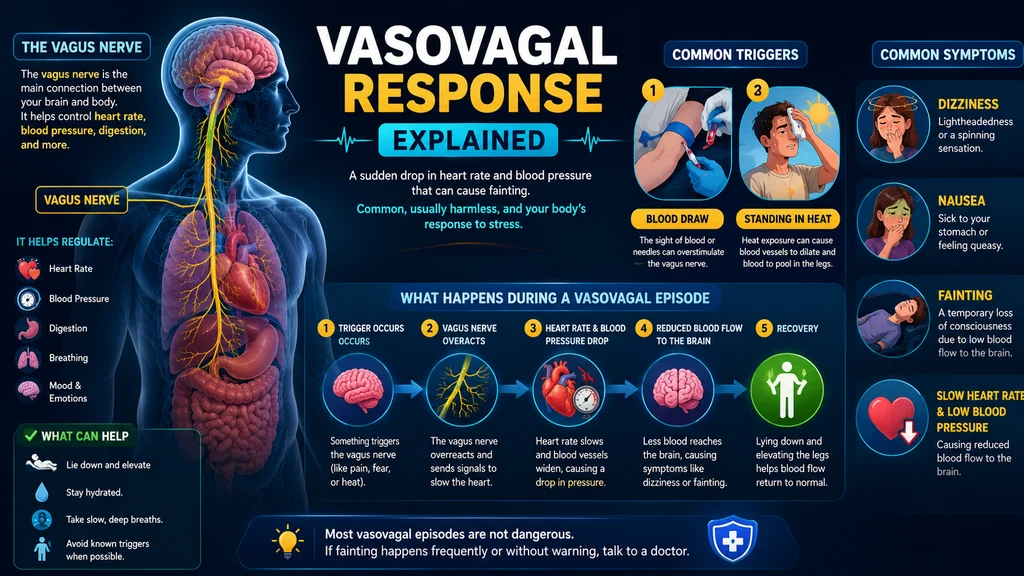
A vasovagal response happens when your nervous system overreacts to triggers like stress, pain, or seeing blood, causing your heart rate and blood pressure to drop suddenly and sometimes leading to fainting. This condition is also known as neurocardiogenic syncope or reflex syncope . Top facts to know: It's the most common cause of fainting, affects up to 40% of people, usually resolves without treatment, can be triggered by emotional distress or standing too long, and recovery typically begins in less than a minute .You’re standing in line, suddenly feeling warm and dizzy. Your vision blurs, your palms get sweaty, and you have this overwhelming urge to sit down. Sound familiar? This might be your body’s natural response to certain triggers, known medically as a vasovagal response.
Whether it happens during a blood draw, after standing too long in the heat, or when you get surprising news, that sudden wave of lightheadedness is incredibly common . The vasovagal response affects roughly one in three people at some point in their lives . Understanding what is a vasovagal response isn’t just medical trivia it can help you recognize warning signs, avoid injuries from fainting, and feel more in control when your body decides to have a moment.
This guide breaks down everything you need to know about this reflex in a way that’s actually easy to understand. No confusing medical jargon, just clear facts about why your body does what it does.
What Is a Vasovagal Response Exactly?
The vasovagal response is your body’s built-in safety mechanism that occasionally works a little too well . During an episode, your nervous system overreacts to certain triggers and causes two things to happen at once: your heart rate slows down, and your blood vessels widen . This combination lowers your blood pressure and reduces blood flow to your brain, which can make you feel lightheaded or even faint .
Example: You’re at the doctor’s office getting blood drawn and suddenly feel like you might pass out.
Meaning: Your vagus nerve got overstimulated and triggered a protective response that temporarily reduced blood flow to your brain.
Common Triggers of Vasovagal Syncope
Vasovagal syncope can be set off by surprisingly ordinary situations. Common triggers include standing for long periods, heat exposure, seeing blood, getting a needle, intense emotional distress, straining during bowel movements, dehydration, and even skipping meals .
Example: You’ve been standing in a crowded concert line on a hot day and start feeling faint.
Meaning: The combination of prolonged standing and heat exposure triggered your vasovagal response.
How the Vagus Nerve Works
The vagus nerve is one of the longest nerves in your body, running from your brainstem down to your chest and abdomen . It regulates key functions like heart rate, blood pressure, breathing, and digestion. When this nerve gets overstimulated, it sends signals that cause your heart to slow and your blood vessels to dilate .
Example: You’re getting an injection and your body suddenly relaxes all at once.
Meaning: Your vagus nerve transmitted a signal that temporarily disrupted your normal blood pressure regulation.
Symptoms Before Fainting
Before you actually faint from a vasovagal episode, you’ll likely experience warning signs called prodromal symptoms . These include lightheadedness, nausea, feeling warm, cold clammy sweat, blurred vision, tunnel vision, and pale skin . Recognizing these early signals can help you take action and prevent a fall.
Example: During a stressful presentation, you start feeling sick to your stomach and your vision goes blurry.
Meaning: Your body is giving you a heads-up that a vasovagal episode might be coming.
Why Vasovagal Syncope Makes You Faint
Fainting happens when your brain doesn’t get enough oxygenated blood . During a vasovagal response, your heart rate slows and blood pools in your legs due to widened blood vessels. This combination drastically reduces blood flow to your brain, and your brain responds by briefly shutting down conscious activity .
Example: You stand up too quickly and suddenly find yourself on the floor.
Meaning: The rapid drop in blood pressure temporarily deprived your brain of oxygen.
Who Gets Vasovagal Syncope
Vasovagal syncope can affect anyone, but it’s most common in children and young adults . Approximately 20-40% of the population will experience some form of vasovagal reaction in their lifetime . It doesn’t discriminate by gender, but some people are simply more susceptible to the reflex .
Example: Your teenage cousin fainted at a concert while your older relatives were perfectly fine.
Meaning: Age can influence susceptibility, with younger people being more likely to experience episodes.
The Difference Between Vasovagal Syncope and Other Fainting
Not all fainting is caused by vasovagal syncope. Unlike fainting from heart rhythm problems, seizures, or low blood sugar, vasovagal syncope is typically harmless and doesn’t require specific treatment . However, because some serious conditions can look similar, it’s wise to consult a doctor if you faint, especially for the first time .
Example: You fainted after getting a shot, but your neighbor fainted while walking and had no trigger.
Meaning: Your episode had a clear trigger, while fainting without explanation might need medical evaluation.
Physical Counterpressure Maneuvers
Physical counterpressure maneuvers are techniques you can use to stop a vasovagal episode. These include crossing your legs, tensing your muscles, or squeezing a rubber ball . These actions help push blood back up from your legs and stabilize your blood pressure .
Example: You feel dizzy at the dentist’s office and start tensing your leg muscles.
Meaning: Your body is using muscle tension to maintain blood pressure while you get through the trigger.
Recovery After a Vasovagal Episode
Recovery from a vasovagal syncope episode usually begins in less than a minute after you lie down . However, you might feel tired, nauseous, or generally off for a short time afterward. It’s important not to stand up too quickly after fainting, as you may be at risk of fainting again within 15 to 30 minutes .
Example: You fainted in a waiting room and felt weak for about 20 minutes after waking up.
Meaning: Your body needs time to fully restore normal blood flow and energy levels.
Prevention and Management
Staying hydrated, avoiding triggers, and eating regular meals are key to preventing vasovagal reactions . If you know you’re going to encounter a trigger, lying down or sitting with your head lowered can help. Healthcare providers may recommend increasing fluid and salt intake for frequent episodes .
Example: You always feel faint during blood draws, so you start drinking extra water before appointments.
Meaning: Simple lifestyle adjustments can significantly reduce your risk of episodes.
When to See a Doctor
While vasovagal syncope is usually harmless, you should consult a healthcare provider after a fainting spell, especially if you’ve never had one before . It’s important to rule out more serious conditions like heart problems or brain issues that can also cause fainting .
Example: You fainted at home without any obvious trigger and decide to get checked out.
Meaning: Even common fainting warrants professional evaluation to ensure it’s nothing serious.
The Body’s Safety Switch
The vasovagal response is believed to be an evolved survival mechanism similar to the “playing dead” reaction seen in some animals . When faced with danger, some animals drop flaccidly and become hypotensive and bradycardica behavior that can help them survive certain threats .
Example: A rabbit freezes and becomes still when a predator is near.
Meaning: The human vasovagal response might be a leftover reflex from our evolutionary past.
Stress and Emotional Triggers
Emotional stress and anxiety are powerful triggers for vasovagal reactions . Intense emotions like fear, the sight of blood, or even extreme pain can directly activate the hypothalamus, which then signals the cardiovascular centers in the brainstem to trigger a vasovagal response .
Example: You hear shocking news and immediately feel weak and dizzy.
Meaning: Your emotional brain is hardwired to the system that controls your heart and blood pressure.
Dehydration and Vasovagal Episodes
Dehydration is one of the most common triggers for vasovagal syncope . When you’re low on fluids, your blood volume decreases, which makes it easier for blood pressure to drop suddenly. Staying well-hydrated, especially in hot weather or during exercise, is crucial for prevention .
Example: You skip water during a morning hike and start feeling faint.
Meaning: Reduced blood volume from dehydration makes it harder for your body to maintain normal blood pressure.
FAQs
What does “vasovagal” actually mean?
Vasovagal describes two parts of your body involved in the response: “vaso” refers to your blood vessels, and “vagal” refers to your vagus nerve. Together, they explain why blood pressure drops during an episode .
Is a vasovagal response dangerous?
Generally, no. Vasovagal syncope is usually harmless and doesn’t require treatment . However, fainting can lead to injuries from falling, and it’s important to get checked out if fainting happens repeatedly or without clear triggers.
Can you prevent vasovagal syncope?
Yes! Staying hydrated, avoiding known triggers, lying down when you feel symptoms starting, and using physical counterpressure maneuvers can all help prevent episodes .
What should I do if someone is having a vasovagal episode?
Help them lie down in a cool, comfortable place. If they’ve fainted, elevating their legs can help restore blood flow to the brain. They should stay lying down for at least 10-15 minutes after regaining consciousness .
Can anxiety trigger a vasovagal response?
Absolutely. Intense emotions like fear and anxiety are among the most common triggers for vasovagal syncope . The hypothalamus responds to emotional stress by activating the cardiovascular centers that cause the response.
Conclusion
Understanding what a vasovagal response is can transform a scary experience into something predictable and manageable. The next time you feel that familiar wave of dizziness or warmth, you’ll know exactly what’s happening your nervous system is just doing its job a little too enthusiastically.
The most important takeaway is that vasovagal syncope is common and usually nothing to worry about. By recognizing your personal triggers, staying hydrated, and acting quickly when symptoms start, you can prevent most episodes. And always rememberif fainting happens without warning or becomes a pattern, it’s worth discussing with a healthcare provider.
Share this guide with someone who gets dizzy at the sight of needles or faints in hot weather. Understanding your body is the first step to staying safe. Save this article for the next time you need a quick reminder of what’s happening and what to do about it.







6 thoughts on “What Is a Vasovagal Response? Triggers, Symptoms & Prevention (2026)”