

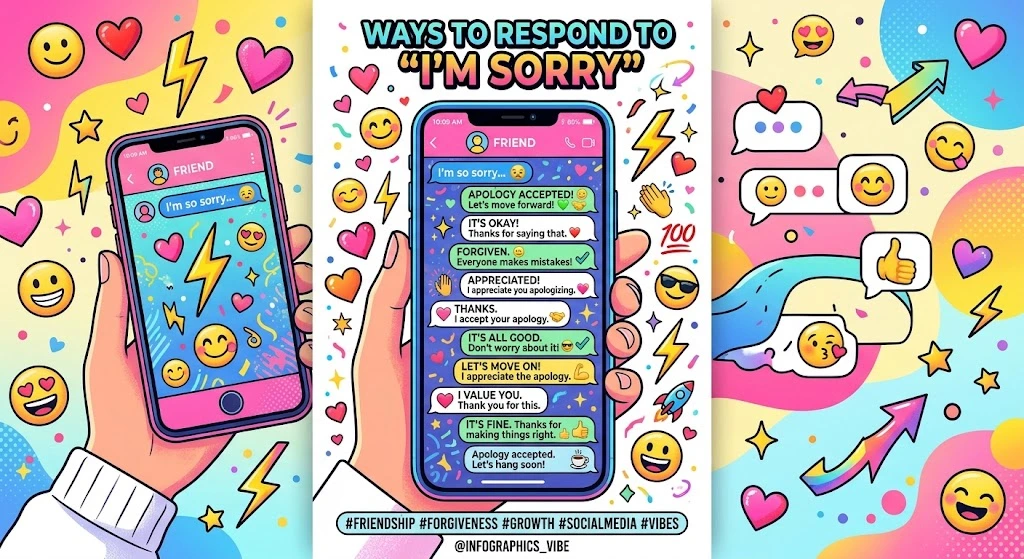
When someone says “I’m sorry,” your reply sets the tone for what happens next. Whether you want to forgive, flirt, or keep it moving, here are 5 top alternatives: “I appreciate that,” “We’re good,” “Thank you for saying that,” “It’s okay, seriously,” and “I hear you.”
You’re mid-scroll, mid-convo, or mid-existential-crisis when your phone buzzes. It’s them. And it’s just three words: “I’m sorry.” Suddenly you’re typing, deleting, retyping, and overthinking what to say next. Sound familiar?
Whether it’s your bestie who cancelled plans again, your work bestie who dropped the ball, or your crush who left you on read for three days, knowing how to respond to I’m sorry can make or break the vibe. It’s not just about forgiveness. It’s about boundaries, feelings, and showing up the way you want to be seen.
The right response can heal, joke, flirt, or even set a boundary. The wrong one? Awkward silence or unnecessary drama. So let’s get into it.
Funny Responses to “I’m Sorry”
Sorry doesn’t unburn my toast, but I’ll allow it.
Example: When your roommate apologizes for eating your leftovers but you’re already planning revenge.
Meaning: You’re forgiving them but keeping the joke alive.
Wow, sorry? In this economy?
Example: When someone apologizes for something small and you want to make it funny.
Meaning: You’re playing with the moment instead of making it heavy.
I’ll add it to your tab.
Example: When your friend keeps apologizing for tiny things and you want to tease them.
Meaning: You’re keeping things light while secretly keeping score.
Sorry accepted. Now pay me in snacks.
Example: When your sibling apologizes for borrowing your stuff without asking.
Meaning: You’re turning the apology into a playful transaction.
That apology was mid, but I’ll take it.
Example: When someone gives a half-hearted sorry and you want to call it out with humor.
Meaning: You’re acknowledging the effort while keeping it real.
Apology received. Processing… still processing… okay done.
Example: When you want to be dramatic about accepting an apology.
Meaning: You’re making the moment funnier by pretending it’s a big deal.
You’re lucky you’re cute when you apologize.
Example: When your partner apologizes for something silly and you want to flirt.
Meaning: You’re mixing forgiveness with a little charm.
Sorry? I thought you were just practicing your vocabulary.
Example: When someone apologizes too much and you want to poke fun.
Meaning: You’re teasing them for over-apologizing.
Cool, cool. So we’re even now, right?
Example: When you’ve both messed up and want to call it a draw.
Meaning: You’re keeping things balanced and light.
I accept your apology and your future coffee run.
Example: When your friend apologizes for being late and you see an opportunity.
Meaning: You’re forgiving them but making it worth your while.
That’s it? I expected a whole speech.
Example: When someone gives a quick sorry and you want to be extra.
Meaning: You’re being playful about wanting more effort.
Apology accepted. Now let’s never speak of this again.
Example: When the situation was awkward and you just want to move on.
Meaning: You’re closing the chapter with humor.
Brutal Responses to “I’m Sorry”
Sorry doesn’t fix what you did.
Example: When someone hurt you deeply and a quick apology isn’t enough.
Meaning: You’re making it clear that words alone won’t cut it.
You should be.
Example: When someone apologizes for something they clearly knew was wrong.
Meaning: You’re acknowledging the apology but not softening the blow.
I’ve heard that before.
Example: When someone keeps apologizing for the same mistake.
Meaning: You’re pointing out that their words lack follow-through.
Cool story. Still waiting for change.
Example: When someone apologizes but you’ve seen no effort to improve.
Meaning: You’re demanding action, not just words.
Apology noted. Trust not restored.
Example: When someone broke your trust and expects instant forgiveness.
Meaning: You’re setting a clear boundary about what comes next.
That apology was for you, not me.
Example: When someone apologizes to clear their own guilt.
Meaning: You’re calling out the selfishness behind the sorry.
You can keep that.
Example: When someone offers a fake or forced apology.
Meaning: You’re rejecting the apology entirely.
I don’t need sorry. I needed better.
Example: When someone let you down in a big way.
Meaning: You’re expressing that the damage is already done.
Save it for someone who cares.
Example: When you’re done with someone’s repeated apologies.
Meaning: You’re shutting down the conversation with finality.
Sorry is just a word. Show me something.
Example: When someone apologizes but you need real change.
Meaning: You’re challenging them to prove it.
You apologized. That’s nice. Now what?
Example: When someone thinks sorry is the end of the conversation.
Meaning: You’re pushing for accountability.
I’ll believe it when I see it.
Example: When someone promises to do better after apologizing.
Meaning: You’re keeping your expectations realistic.
Flirty Responses to “I’m Sorry”
You can make it up to me over dinner.
Example: When your crush apologizes for cancelling and you want to turn it into a date.
Meaning: You’re forgiving them while creating a romantic opportunity.
Apology accepted, but you owe me a hug.
Example: When your partner apologizes and you want some affection.
Meaning: You’re turning the moment into a chance for closeness.
I forgive you. But only because you’re cute.
Example: When someone you like apologizes for something small.
Meaning: You’re being playful and flirty while accepting.
Sorry looks good on you.
Example: When your crush apologizes and you want to tease them.
Meaning: You’re flirting while acknowledging their apology.
You’re gonna have to try harder to get rid of me.
Example: When someone apologizes for pushing you away.
Meaning: You’re reassuring them while keeping the flirt alive.
How about you apologize in person?
Example: When you want to see them and turn the apology into a meetup.
Meaning: You’re creating an excuse to get closer.
I’ll forgive you if you say it again. Slower.
Example: When you’re feeling playful and want to stretch the moment.
Meaning: You’re flirting by making them repeat themselves.
That sorry was cute. Do it again.
Example: When your partner apologizes in a sweet way.
Meaning: You’re enjoying the moment and want more of it.
You’re lucky I like you.
Example: When someone you’re into apologizes for something silly.
Meaning: You’re flirting while letting them off the hook.
Accepted. Now come here.
Example: When you want to skip the words and go straight to making up.
Meaning: You’re turning the apology into a moment of connection.
I knew you couldn’t stay mad at me.
Example: When your crush apologizes after a small argument.
Meaning: You’re being confident and playful.
Apology accepted. Date night is on you.
Example: When your partner apologizes and you want to plan something fun.
Meaning: You’re forgiving them while keeping the romance alive.
Polite Responses to “I’m Sorry”
Thank you for apologizing. I appreciate it.
Example: When a coworker apologizes for a mistake at work.
Meaning: You’re acknowledging their effort with grace.
It’s okay. These things happen.
Example: When someone apologizes for something minor.
Meaning: You’re being understanding and easygoing.
I understand. Thank you for saying that.
Example: When a friend apologizes for cancelling last minute.
Meaning: You’re showing empathy while accepting the apology.
No worries at all.
Example: When someone apologizes for something you barely noticed.
Meaning: You’re reassuring them that it’s not a big deal.
I appreciate you taking responsibility.
Example: When someone owns up to a mistake and apologizes.
Meaning: You’re validating their accountability.
It’s totally fine. Don’t stress about it.
Example: When someone apologizes for being late.
Meaning: You’re keeping the mood calm and kind.
Thank you. That means a lot.
Example: When someone apologizes for something that hurt you.
Meaning: You’re showing that their words matter.
We’re good. Thanks for saying sorry.
Example: When a friend apologizes after a small disagreement.
Meaning: You’re closing the loop politely.
I get it. No hard feelings.
Example: When someone apologizes for a misunderstanding.
Meaning: You’re keeping the relationship positive.
That’s really kind of you to say.
Example: When someone apologizes sincerely.
Meaning: You’re acknowledging their sincerity with warmth.
All good. Let’s move forward.
Example: When you want to leave the issue in the past.
Meaning: You’re being forward-thinking and mature.
I hear you. Thank you.
Example: When someone apologizes and you want to keep it simple.
Meaning: You’re acknowledging them without overexplaining.
Professional Responses to “I’m Sorry”
Thank you for addressing that. Let’s move forward.
Example: When a colleague apologizes for a work error.
Meaning: You’re keeping things professional and solution-focused.
I appreciate the apology. Let’s focus on the next steps.
Example: When a team member apologizes for missing a deadline.
Meaning: You’re redirecting to action instead of dwelling.
Noted. Let’s make sure it doesn’t happen again.
Example: When someone apologizes for a repeated issue at work.
Meaning: You’re setting expectations without being harsh.
Thank you. I value your accountability.
Example: When an employee apologizes for a mistake.
Meaning: You’re reinforcing positive professional behavior.
Understood. Let’s keep communication open.
Example: When a coworker apologizes for a misunderstanding.
Meaning: You’re encouraging transparency moving forward.
Apology accepted. Let’s realign on goals.
Example: When a project goes off track and someone apologizes.
Meaning: You’re steering the conversation back to progress.
I appreciate you owning that.
Example: When someone takes responsibility in a meeting.
Meaning: You’re acknowledging their professionalism.
Thank you. Let’s learn from this.
Example: When a mistake happens and someone apologizes.
Meaning: You’re promoting growth and improvement.
No need to apologize. Let’s just fix it.
Example: When someone apologizes for something fixable.
Meaning: You’re prioritizing solutions over sentiment.
I hear you. Let’s document this for next time.
Example: When a recurring issue needs a process change.
Meaning: You’re turning the apology into a learning moment.
Thanks for the transparency.
Example: When someone admits a mistake and apologizes.
Meaning: You’re valuing honesty in the workplace.
Let’s keep it moving. Thanks for the update.
Example: When someone apologizes for a delay.
Meaning: You’re keeping things efficient and calm.
Creative Responses to “I’m Sorry”
Apology accepted. You now owe me a haiku.
Example: When your artsy friend apologizes and you want something fun.
Meaning: You’re turning the moment into a creative challenge.
Sorry? That’s going in my memoir.
Example: When someone apologizes dramatically and you match the energy.
Meaning: You’re making the moment memorable and funny.
I’ll forgive you if you write it in cursive.
Example: When you want to be playful about accepting an apology.
Meaning: You’re adding a creative twist to the exchange.
Okay, but this is going on your permanent record.
Example: When your friend apologizes for something silly.
Meaning: You’re joking about keeping score.
Apology received. Now draw me a picture of your regret.
Example: When you want to be absurd and funny.
Meaning: You’re turning the apology into an art project.
You get one free pass. Use it wisely.
Example: When someone apologizes and you want to make it a game.
Meaning: You’re adding stakes to the forgiveness.
I accept. But you have to name your next pet after me.
Example: When your friend apologizes and you want to be extra.
Meaning: You’re making the forgiveness memorable.
Sorry accepted. Please hold for your emotional receipt.
Example: When you want to be witty and over-the-top.
Meaning: You’re making a joke out of the formality.
I’ll add this to the apology Hall of Fame.
Example: When someone gives a really good apology.
Meaning: You’re celebrating their effort in a fun way.
You’re forgiven. Now write a song about it.
Example: When your musical friend apologizes.
Meaning: You’re turning the moment into a creative prompt.
Apology logged. Emotionally archived.
Example: When you want to be clever and detached.
Meaning: You’re being witty about the process.
Fine. But you’re starring in my tell-all.
Example: When your dramatic friend apologizes.
Meaning: You’re joking about making it a big deal.
Sarcastic Responses to “I’m Sorry”
Oh wow, sorry? That changes everything.
Example: When someone apologizes but you’re not impressed.
Meaning: You’re being sarcastic about the impact of their words.
Let me alert the press.
Example: When someone apologizes for something minor.
Meaning: You’re exaggerating the importance for comedic effect.
I’m sure that was really hard for you.
Example: When someone apologizes half-heartedly.
Meaning: You’re calling out their lack of sincerity.
Sorry? Groundbreaking.
Example: When someone apologizes for the same thing again.
Meaning: You’re mocking the repetition.
And yet here we are.
Example: When someone apologizes after causing a problem.
Meaning: You’re pointing out that the damage is done.
I’ll treasure this moment forever.
Example: When you want to be sarcastic about a fake apology.
Meaning: You’re mocking the drama of the situation.
You should write a book.
Example: When someone gives a long, dramatic apology.
Meaning: You’re teasing them for overdoing it.
That’s the best you’ve got?
Example: When someone apologizes without real effort.
Meaning: You’re challenging them to do better.
I’m so moved I might cry.
Example: When someone apologizes insincerely.
Meaning: You’re being sarcastic about their lack of authenticity.
Let me update my feelings journal.
Example: When you want to be dry and witty.
Meaning: You’re mocking the emotional weight of the moment.
Sorry? Never heard that one before.
Example: When someone apologizes for something predictable.
Meaning: You’re pointing out the lack of originality.
Cool. I’ll frame that.
Example: When someone apologizes and you want to be sarcastic.
Meaning: You’re making fun of the moment’s significance.
Cute Responses to “I’m Sorry”
It’s okay, you’re still my favorite.
Example: When your friend apologizes for something small.
Meaning: You’re reassuring them with affection.
Aww, don’t worry about it.
Example: When someone apologizes for something minor.
Meaning: You’re being sweet and comforting.
You’re forgiven, cutie.
Example: When your partner apologizes.
Meaning: You’re being playful and affectionate.
It’s okay! I could never stay mad at you.
Example: When your bestie apologizes.
Meaning: You’re showing love and forgiveness.
Thanks for saying sorry. You’re the best.
Example: When someone apologizes sincerely.
Meaning: You’re appreciating them with warmth.
No worries, love. We’re good.
Example: When your partner apologizes.
Meaning: You’re being gentle and reassuring.
You’re too cute to stay mad at.
Example: When your crush apologizes.
Meaning: You’re flirting while forgiving.
It’s alright. I forgive you.
Example: When someone apologizes for a small mistake.
Meaning: You’re being kind and simple.
Don’t be sorry. Just be you.
Example: When someone apologizes for being themselves.
Meaning: You’re reassuring them with love.
You’re okay. We’re okay.
Example: When your partner apologizes after a disagreement.
Meaning: You’re calming the situation with tenderness.
I forgive you. Now come here.
Example: When you want to hug it out.
Meaning: You’re offering comfort and closeness.
It’s fine. You mean too much to me.
Example: When a close friend apologizes.
Meaning: You’re expressing how much they matter.
Dramatic Responses to “I’m Sorry”
Sorry? After everything?
Example: When someone apologizes for a major betrayal.
Meaning: You’re expressing hurt and disbelief.
I’ll never forget this.
Example: When someone apologizes for something deeply hurtful.
Meaning: You’re letting them know the impact is lasting.
You’ve broken my trust.
Example: When someone apologizes for lying.
Meaning: You’re being honest about the damage done.
This is going to take time.
Example: When someone apologizes and you need space.
Meaning: You’re setting a boundary for healing.
I need a minute. Or a year.
Example: When someone apologizes and you’re overwhelmed.
Meaning: You’re expressing how much it affected you.
I can’t just pretend this didn’t happen.
Example: When someone apologizes and expects instant forgiveness.
Meaning: You’re being real about your feelings.
You really hurt me.
Example: When someone apologizes for something painful.
Meaning: You’re being direct about your emotions.
I don’t know if I can forgive this.
Example: When the apology feels too small for the damage.
Meaning: You’re being honest about your limits.
This changes things.
Example: When someone apologizes for breaking your trust.
Meaning: You’re acknowledging the shift in the relationship.
I’m not okay. But I heard you.
Example: When someone apologizes and you’re still processing.
Meaning: You’re being vulnerable and honest.
I need more than sorry.
Example: When someone apologizes without showing change.
Meaning: You’re asking for accountability.
I hope you mean it.
Example: When someone apologizes and you’re unsure.
Meaning: You’re expressing doubt while staying open.
Chill and Casual Responses to “I’m Sorry”
You’re good.
Example: When someone apologizes for something small.
Meaning: You’re keeping it simple and easy.
No worries.
Example: When someone apologizes for a minor thing.
Meaning: You’re being relaxed and unbothered.
It’s all good.
Example: When someone apologizes for a mistake.
Meaning: You’re letting it go without drama.
Don’t sweat it.
Example: When someone apologizes for something tiny.
Meaning: You’re being casual and kind.
We’re cool.
Example: When someone apologizes after a small disagreement.
Meaning: You’re reassuring them without overexplaining.
No big deal.
Example: When someone apologizes for something minor.
Meaning: You’re keeping the vibe light.
All good, fam.
Example: When your friend apologizes.
Meaning: You’re being friendly and laid-back.
It’s fine, seriously.
Example: When someone apologizes and you want to move on.
Meaning: You’re being chill and clear.
We’re good, don’t worry.
Example: When someone apologizes for a small mistake.
Meaning: You’re keeping the peace.
No stress.
Example: When someone apologizes for something small.
Meaning: You’re being easygoing.
You’re fine.
Example: When someone apologizes for a tiny thing.
Meaning: You’re keeping it simple.
It’s whatever.
Example: When you’re not bothered by the apology.
Meaning: You’re being casual and unbothered.
Confident Responses to “I’m Sorry”
I know.
Example: When someone apologizes and you expected it.
Meaning: You’re owning your worth and keeping it cool.
Apology accepted. Let’s move on.
Example: When someone apologizes and you’re ready to move forward.
Meaning: You’re being assertive and clear.
Thank you. I deserve that.
Example: When someone apologizes for treating you poorly.
Meaning: You’re affirming your self-worth.
I appreciate it. But I’m still figuring things out.
Example: When someone apologizes and you’re not ready to forgive.
Meaning: You’re being honest and self-aware.
You’re right to apologize.
Example: When someone apologizes for something they clearly did wrong.
Meaning: You’re acknowledging their accountability.
I’m glad you said that.
Example: When someone apologizes sincerely.
Meaning: You’re validating their effort while staying confident.
I’m not mad. I’m just done with that behavior.
Example: When someone apologizes for repeating a mistake.
Meaning: You’re setting a boundary with strength.
I hear you. But I’m moving forward.
Example: When someone apologizes and you’re ready to leave it behind.
Meaning: You’re being decisive and self-assured.
Thanks. I’m good either way.
Example: When someone apologizes and you’re not affected.
Meaning: You’re showing emotional independence.
I accept. But I won’t forget.
Example: When someone apologizes for something hurtful.
Meaning: You’re being honest and protective of yourself.
You’re forgiven. But I’m watching.
Example: When someone apologizes and you want to set expectations.
Meaning: You’re being confident and cautious.
I know my worth. Thanks for catching up.
Example: When someone apologizes after taking you for granted.
Meaning: You’re affirming your value with confidence.
Emotional Responses to “I’m Sorry”
I just need you to understand how much this hurt.
Example: When someone apologizes for something deeply painful.
Meaning: You’re expressing your pain honestly.
I’m not ready to forgive you yet.
Example: When someone apologizes and you need time.
Meaning: You’re honoring your feelings.
I appreciate the apology, but I’m still processing.
Example: When someone apologizes and you’re not ready to respond fully.
Meaning: You’re being vulnerable and honest.
This really affected me.
Example: When someone apologizes for something that shook you.
Meaning: You’re letting them know the impact.
I want to forgive you, but I’m scared.
Example: When someone apologizes after breaking your trust.
Meaning: You’re being open about your fear.
I’ve been carrying this for a while.
Example: When someone apologizes for something that happened long ago.
Meaning: You’re sharing the weight you’ve held.
Thank you. I needed to hear that.
Example: When someone apologizes sincerely.
Meaning: You’re acknowledging your emotional needs.
I’m still hurting, but I hear you.
Example: When someone apologizes and you’re in pain.
Meaning: You’re being honest about where you are.
I don’t know how to feel right now.
Example: When someone apologizes and you’re overwhelmed.
Meaning: You’re being real about your confusion.
I’m trying to let it go.
Example: When someone apologizes and you’re working through it.
Meaning: You’re showing effort and vulnerability.
I forgive you, but I need time.
Example: When someone apologizes and you need space to heal.
Meaning: You’re being honest and self-protective.
I hope you really mean it this time.
Example: When someone apologizes after repeated mistakes.
Meaning: You’re expressing hope and caution.
Sweet Responses to “I’m Sorry”
It’s okay. I forgive you.
Example: When someone apologizes for something small.
Meaning: You’re being gentle and kind.
Thank you for saying sorry. That means a lot.
Example: When someone apologizes sincerely.
Meaning: You’re showing appreciation with warmth.
I could never stay mad at you.
Example: When your loved one apologizes.
Meaning: You’re expressing love and forgiveness.
You’re forgiven. Always.
Example: When your partner apologizes.
Meaning: You’re offering unconditional grace.
It’s alright. I understand.
Example: When someone apologizes for something you get.
Meaning: You’re being empathetic and sweet.
I appreciate you. Thanks for apologizing.
Example: When a friend apologizes.
Meaning: You’re valuing them and their effort.
It’s okay. We all make mistakes.
Example: When someone apologizes for an honest error.
Meaning: You’re being understanding and kind.
You’re okay. I’m not going anywhere.
Example: When your partner apologizes after a fight.
Meaning: You’re reassuring them of your love.
I forgive you. Let’s move forward together.
Example: When someone apologizes and you want to grow together.
Meaning: You’re being loving and forward-looking.
Thanks for owning up. I love you.
Example: When your partner apologizes.
Meaning: You’re combining forgiveness with affection.
It’s fine. You’re too important to me.
Example: When a close friend apologizes.
Meaning: You’re expressing how much they matter.
I hear you. And I still care about you.
Example: When someone apologizes and you want to reassure them.
Meaning: You’re being kind and supportive.
Clever Responses to “I’m Sorry”
Apology accepted. Interest compounded.
Example: When someone apologizes for being late again.
Meaning: You’re being witty and keeping score.
You’re forgiven. But my memory isn’t.
Example: When someone apologizes for repeating a mistake.
Meaning: You’re being clever about accountability.
Sorry is just step one.
Example: When someone apologizes but you want to see action.
Meaning: You’re pointing out that words aren’t enough.
I’ll accept that. For now.
Example: When someone apologizes and you want to keep them on their toes.
Meaning: You’re being clever and cautious.
Apology received. Trust recalibrating.
Example: When someone apologizes after breaking your trust.
Meaning: You’re being witty about the process.
You’re lucky I’m a forgiving person.
Example: When someone apologizes and you want to remind them.
Meaning: You’re being clever and confident.
That apology had potential.
Example: When someone gives a mediocre sorry.
Meaning: You’re being witty about their effort.
I’ll take it. But I’m not easy.
Example: When someone apologizes and you want to be playful.
Meaning: You’re being clever and self-aware.
Sorry? Bold move.
Example: When someone apologizes for something surprising.
Meaning: You’re being witty about their choice.
Apology logged. Emotionally bookmarked.
Example: When you want to be clever and detached.
Meaning: You’re being witty about the moment.
You’re forgiven. But I’m keeping the receipts.
Example: When someone apologizes and you want to stay smart.
Meaning: You’re being clever about boundaries.
That was a solid sorry. I’ll allow it.
Example: When someone apologizes well.
Meaning: You’re being witty and generous.
FAQs
What does “I’m sorry” really mean?
It depends on the person and situation. Sometimes it’s genuine, sometimes it’s a reflex.
Can “I’m sorry” be flirty?
Yes, especially if it’s followed by playful or sweet energy.
How do I respond professionally?
Keep it calm. Say “Thank you for letting me know” or “Let’s move forward.”
What if I don’t actually mean it?
You can say “I hear you” or “Thanks for saying that” without full forgiveness.
Is humor okay when replying?
Yes, if the situation is light. Read the room first.
Conclusion
Responding to “I’m sorry” doesn’t have to be awkward or heavy. Whether you’re forgiving, flirting, or setting boundaries, the right words can shape the whole conversation. You don’t need a script. Just vibe with what feels real to you.
Try out a few of these responses and see what lands. Save this list for the next time your phone buzzes with those three little words. Share it with a friend who’s always overthinking their replies. And remember: you’ve got this.






